
Best High-Fiber Foods for Gut Health (2026 Guide)
A healthy gut microbiome runs on fiber. But not all fiber is equal — different types feed different bacterial strains, and the variety of high-fiber foods you eat matters just as much as the total amount. This guide covers the best high-fiber foods for gut health in 2026, ranked by fiber content, microbiome impact, and how easy they are to work into everyday meals.
The goal: 30g of fiber per day from as many different plant sources as possible. Most people get half that. Here's how to close the gap.
Why Fiber Is the Foundation of Gut Health
Fiber is the only macronutrient your small intestine cannot digest. It travels intact to the large intestine, where gut bacteria ferment it into short-chain fatty acids (SCFAs) — particularly butyrate, propionate, and acetate. These SCFAs reduce inflammation, strengthen the gut lining, regulate appetite, and have been linked to lower risk of colorectal cancer, type 2 diabetes, and cardiovascular disease.
The more diverse your fiber sources, the more diverse your bacterial populations. Dietary diversity is the single biggest driver of microbiome diversity — which is why the 30 plants challenge has become one of the most evidence-backed approaches to gut health.
The Best High-Fiber Foods, by Category
Legumes
Legumes are the highest-fiber foods by weight and among the most studied for gut health benefits.
- Lentils — 15.6g fiber per cooked cup. Rich in resistant starch that feeds Bifidobacterium and Lactobacillus.
- Black beans — 15g per cooked cup. High in polyphenols that act as prebiotics alongside their fiber content.
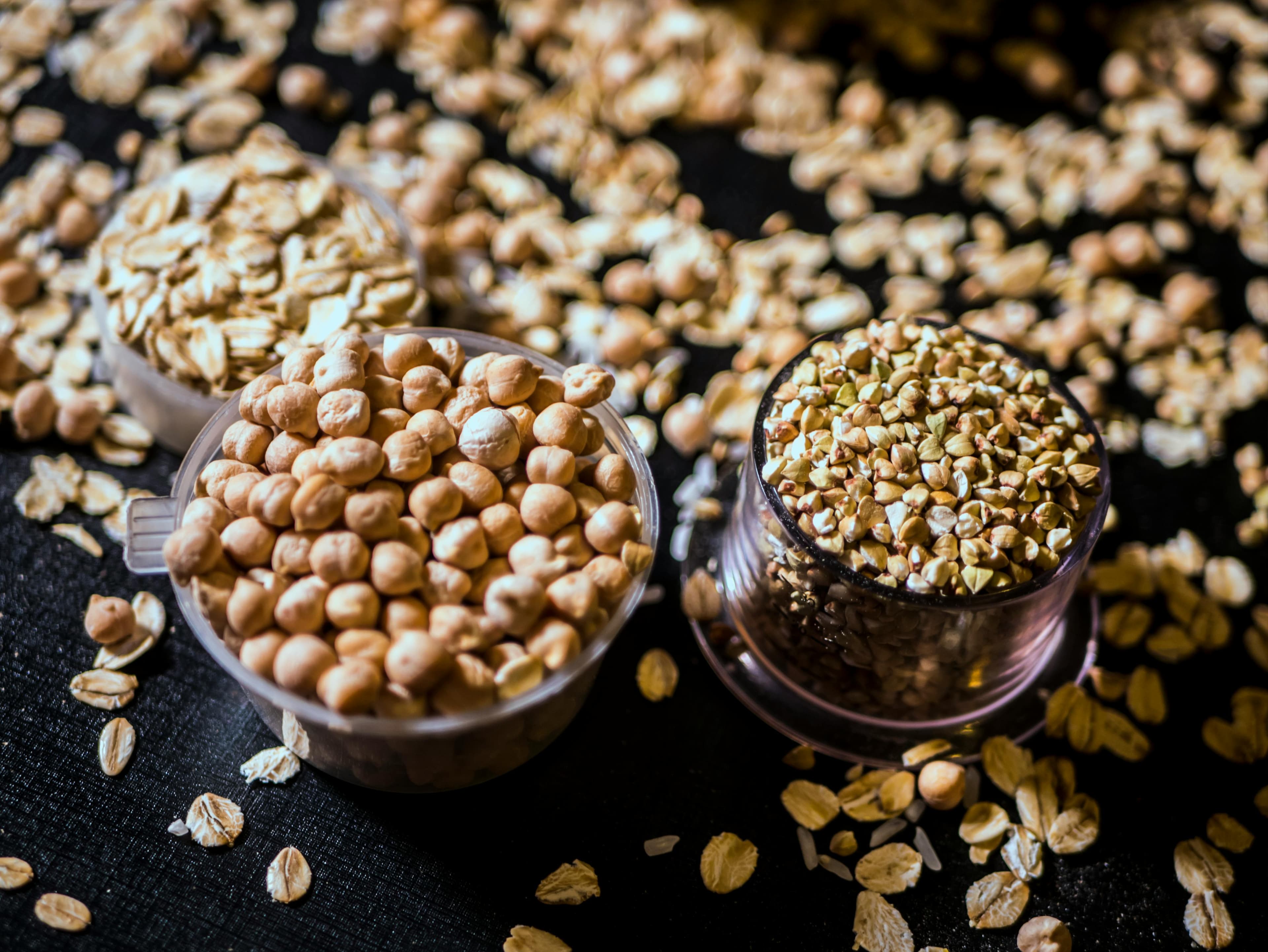
- Chickpeas — 12.5g per cooked cup. One of the most versatile legumes; the base of hummus counts.
- Edamame — 8g per cup. One of the easiest high-fiber snacks; pairs well with a light seasoning.
How to use them: Swap half the meat in any recipe for lentils. Add a tin of chickpeas to salads. A half-cup of beans at lunch adds ~8g of fiber in one move.
Whole Grains
Whole grains provide a mix of soluble and insoluble fiber, with a slower glycemic impact than refined grains.
- Oats — 4g per half cup dry, plus beta-glucan, a soluble fiber with particularly strong evidence for feeding beneficial bacteria and lowering LDL cholesterol.
- Barley — 6g per cooked cup. The highest beta-glucan content of any grain.
- Bulgur wheat — 8g per cooked cup. Quick to cook, higher fiber than brown rice.
- Quinoa — 5g per cooked cup. A complete protein and a solid fiber source; technically a seed.
How to use them: Replace white rice with bulgur or barley. Overnight oats with berries is one of the highest-fiber breakfasts you can make with minimal effort.
Vegetables
Vegetables vary widely in fiber content. The below are the standouts.
- Artichoke hearts — 10g per cooked cup. One of the richest prebiotic vegetables; high in inulin, which selectively feeds Bifidobacteria.
- Green peas — 9g per cup. Underrated; most people don't think of peas as a high-fiber food.
- Broccoli — 5g per cup. Provides sulforaphane alongside fiber — a combination that supports both gut and liver health.
- Carrots — 3.6g per cup raw. Particularly high in pectin, a soluble fiber that slows digestion and feeds beneficial bacteria.
- Sweet potato — 4g per medium potato with skin. The skin adds significant insoluble fiber; don't peel it.
How to use them: Roast a tray of mixed vegetables on Sunday — broccoli, carrots, and sweet potato — and use them across three or four meals in the week.
Fruits
Whole fruits always beat juice. The fiber is in the flesh and skin, not the liquid.
- Raspberries — 8g per cup. The highest-fiber fruit per serving. Easy to add to porridge, yogurt, or smoothies.
- Avocado — 10g per avocado. Mostly insoluble fiber; also high in monounsaturated fat which supports anti-inflammatory gut bacteria.
- Pear — 5.5g per medium pear with skin. High in pectin; the skin adds most of the fiber, so don't peel.
- Apple — 4.4g per medium apple with skin. A classic prebiotic food; the pectin in apple skin feeds Bacteroidetes populations.
- Kiwi — 2.7g per fruit. Particularly good for constipation-related gut issues; two kiwis daily has clinical evidence behind it.
How to use them: Add a handful of raspberries or blueberries to whatever you're already eating for breakfast. The fiber adds up fast.
Nuts and Seeds
Calorie-dense but fiber-rich — and most people eat them in small amounts, so they're easy to add without overhauling meals.
- Chia seeds — 10g fiber per 28g serving. Absorb water to form a gel, which slows digestion and feeds gut bacteria.
- Flaxseeds — 8g per 28g. Ground flaxseeds are more bioavailable than whole. High in lignans — a type of polyphenol with prebiotic effects.
- Almonds — 3.5g per 28g. Also high in prebiotic polyphenols; one of the most studied nuts for microbiome effects.
- Walnuts — 2g per 28g. Lower in fiber but high in omega-3 fatty acids that reduce gut inflammation.
How to use them: A tablespoon of ground flaxseed stirred into porridge or a smoothie adds nearly 3g of fiber and takes five seconds.
Herbs and Spices
Herbs and spices count toward your plant diversity score and contain polyphenols that act as prebiotics — even in small amounts.
- Garlic — High in inulin and fructooligosaccharides; one of the most powerful prebiotic foods per gram.
- Onion and leek — Same family as garlic; also high in inulin.
- Ginger — Not high in fiber, but its gingerols have anti-inflammatory effects in the gut lining.
- Turmeric — Curcumin modulates the composition of the gut microbiome in ways that go beyond its fiber content.
How Much Fiber Do You Actually Need?
The NHS recommends 30g per day for adults. The American Dietary Guidelines suggest 25–38g depending on sex and age. Most people in the UK and US average around 15–18g — roughly half the recommended amount.
Getting to 30g doesn't require a dramatic diet overhaul. A practical target day might look like:
| Meal | Foods | Fiber | |---|---|---| | Breakfast | Oats, raspberries, flaxseed | ~12g | | Lunch | Lentil soup, wholegrain bread | ~13g | | Dinner | Salmon, roasted broccoli, sweet potato | ~7g | | Total | | ~32g |
Building Diversity Alongside Volume
Total fiber grams matter — but so does variety. The more different plant species you eat, the broader the range of prebiotic compounds reaching your gut bacteria.
If you're not already tracking plant diversity, the 30 plants challenge is the most practical framework for doing this. It encourages you to eat 30 different plant types per week — and as this guide shows, hitting that number is far more achievable than it sounds when you're working across legumes, whole grains, vegetables, fruits, nuts, seeds, and spices.
When to Increase Fiber Gradually
One important caveat: if your current fiber intake is low, increasing it quickly will cause bloating and gas. Your gut bacteria need two to four weeks to adapt to higher fiber loads. The practical approach is to add five to ten grams per week rather than jumping straight to 30g overnight.
The payoff for patience is significant. Higher dietary fiber is associated with greater microbiome diversity, stronger gut barrier function, lower systemic inflammation, and better long-term metabolic health. The best high-fiber foods are also, not coincidentally, some of the most nutrient-dense foods available — which makes this one of the most efficient dietary changes you can make.