
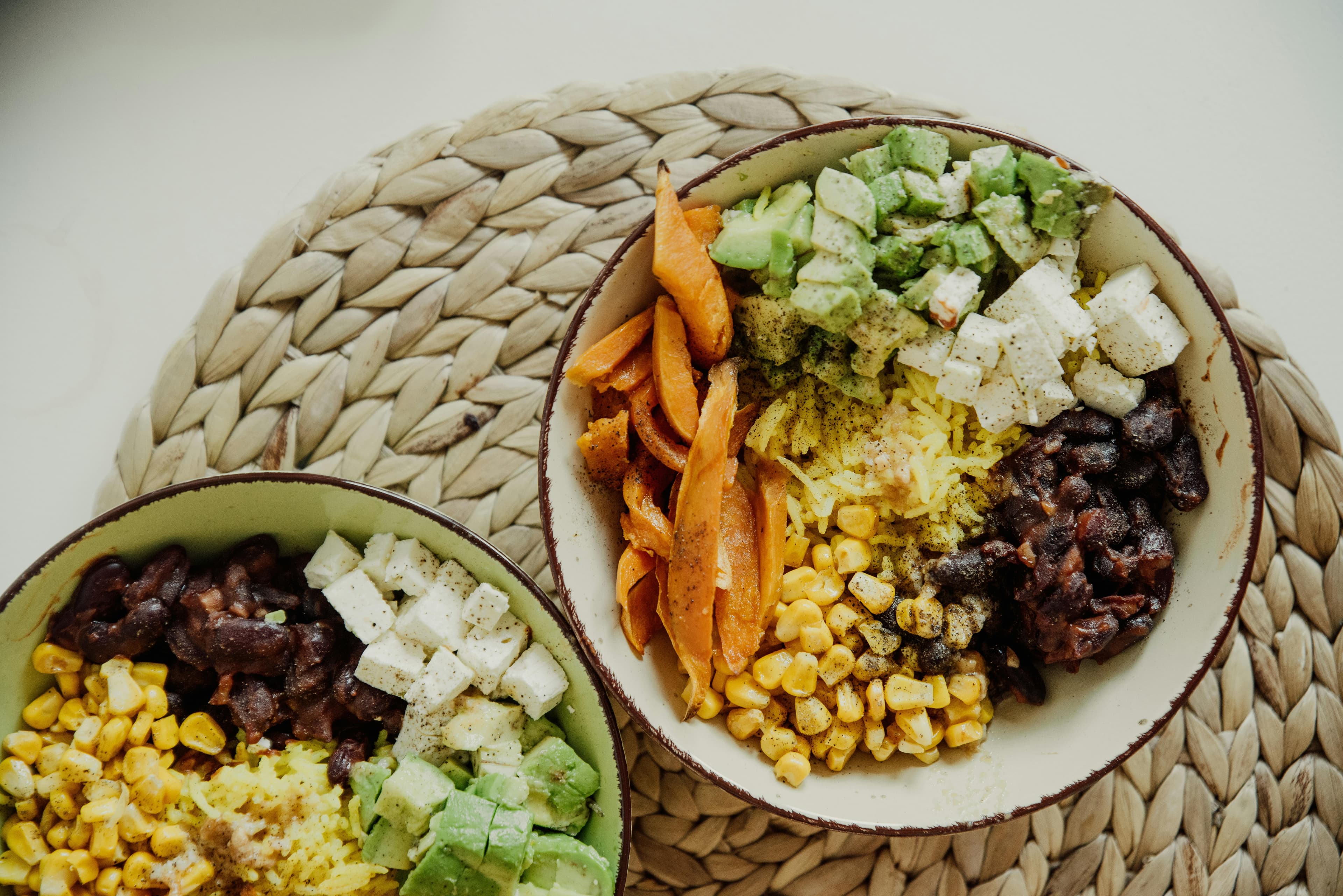
How to Hit 25–30 Gut-Friendly Ingredients a Week (Without Overwhelm)
The original 30 plants challenge gets a lot of attention — and for good reason. The science behind it is solid: more diverse plant intake correlates directly with a more diverse gut microbiome. But for most people, "30 plants" sounds like a full-time job.
It doesn't have to be. With a small set of weekly habits, hitting 25–30 gut-friendly ingredients becomes something that happens automatically — not something you actively manage. This guide covers exactly how to get there, including the variations that make the challenge more achievable and more impactful than the classic version.
Key insight: the challenge works because diversity matters more than quantity. 20g of fiber from oats alone is less valuable to your microbiome than 10g each from oats, lentils, and flaxseed. Variety is the mechanism — these habits are designed to build it in without thinking.
What Counts as a Gut-Friendly Ingredient
The original 30 plants challenge counts only plant foods. A more useful variation for 2026 — one that reflects where gut health science has moved — expands the definition slightly:
Plants (every variety counts separately):
- Vegetables, fruits, legumes, whole grains, nuts, seeds, herbs, spices
Fermented foods (count as bonus gut points):
- Kefir, live yogurt, kimchi, sauerkraut, miso, kombucha, tempeh — each one adds live bacteria alongside your plant fiber
Prebiotic-rich extras:
- Chicory root, Jerusalem artichoke, green banana flour, inulin powder — concentrated prebiotic sources that don't take up much room but meaningfully feed gut bacteria
In practice, this means a typical day can get to 12–15 gut-friendly ingredients with very little effort, leaving only a small gap to close across the rest of the week.
The 5 Habits That Make It Automatic
1. Keep a frozen vegetable rotation
Frozen vegetables count as fully as fresh — the freezing process doesn't reduce their fiber or prebiotic value. Keeping 4–5 different frozen vegetables on rotation means variety is always available even when fresh produce runs low.
A simple rotation: frozen peas, edamame, spinach, sweetcorn, and mixed peppers. Add two of these to any dinner and you've added two plant points in 90 seconds. Rotate the selection every two weeks to keep introducing new varieties.
2. Build a seed mix and use it daily
Seeds are arguably the most efficient plant-diversity food available. A tablespoon of mixed seeds can add 3–4 plant points to any meal with zero preparation.
A practical base mix: flaxseed, chia seeds, pumpkin seeds, sunflower seeds, and sesame seeds. Grind the flaxseed for better nutrient absorption. Keep the mix in a jar and add it to porridge, yogurt, salads, or soups every day. That's 5 plant points before you've made a single decision about what to eat.
3. Cook grains in batches
Whole grains — brown rice, quinoa, barley, buckwheat, farro — are among the best prebiotic sources available, but cooking them from scratch takes time. The solution is to cook a large batch on Sunday and use it throughout the week.
Importantly, cooked and cooled grains develop more resistant starch than freshly cooked ones, which makes them even more prebiotic. Refrigerated leftover rice or barley is nutritionally superior to freshly cooked for gut health purposes.
4. Use herbs and spices deliberately
Each herb and spice counts as a separate plant. Most people season food with the same two or three spices every day without thinking. A deliberate rotation — cumin, coriander, turmeric, smoked paprika, fennel seeds, cinnamon, ginger, and black pepper — can add 4–6 plant points per week with no extra food preparation.
Keep 8–10 spices visible and accessible on the counter rather than stored away. Visibility drives use.
5. Default to varied legumes
Legumes are the highest-fiber plant foods available, but most people eat the same one (usually chickpeas or kidney beans) repeatedly. Each type of legume feeds slightly different bacterial populations — the variety of fiber structures matters as much as the amount.
Stock four or five types of canned legumes: lentils, black beans, cannellini beans, chickpeas, and butter beans. Rotate which one you use in meals throughout the week. This alone can add 4–5 different plant points without changing anything else about what you're cooking.
A Real Week of 25–30 Gut-Friendly Ingredients
Here's what a realistic week looks like when these habits are in place. This isn't a meal plan — it's an illustration of how points accumulate passively.
Breakfast (daily): Porridge with oats, kefir, banana, blueberries, and seed mix → 7 ingredients (oats, banana, blueberries, flaxseed, chia, pumpkin seed, sunflower seed)
Lunch (varied through the week): Grain bowls with brown rice or quinoa, roasted vegetables, and a legume → 5–7 new ingredients depending on rotation
Dinner (varied): Stir-fries, soups, curries — each using 2–3 different spices, a varied vegetable base, and one of the frozen rotation → 6–8 ingredients including herbs and spices
Snacks: Apple or pear, a small handful of walnuts or almonds → 2–3 more
Total across a week: easily 25–30 without any of these meals being unusual, complicated, or time-consuming.
Track It Without the Spreadsheet
The reason most people don't maintain the challenge long-term isn't motivation — it's friction. Counting plant points manually in a notes app or spreadsheet is tedious enough that most people stop within two weeks.
NutriBloom's daily tracking screen is built specifically for this. As you log meals, the app automatically tallies your weekly plant diversity score and shows you which food groups you've hit and which you're missing — in a format closer to a game than a food journal.
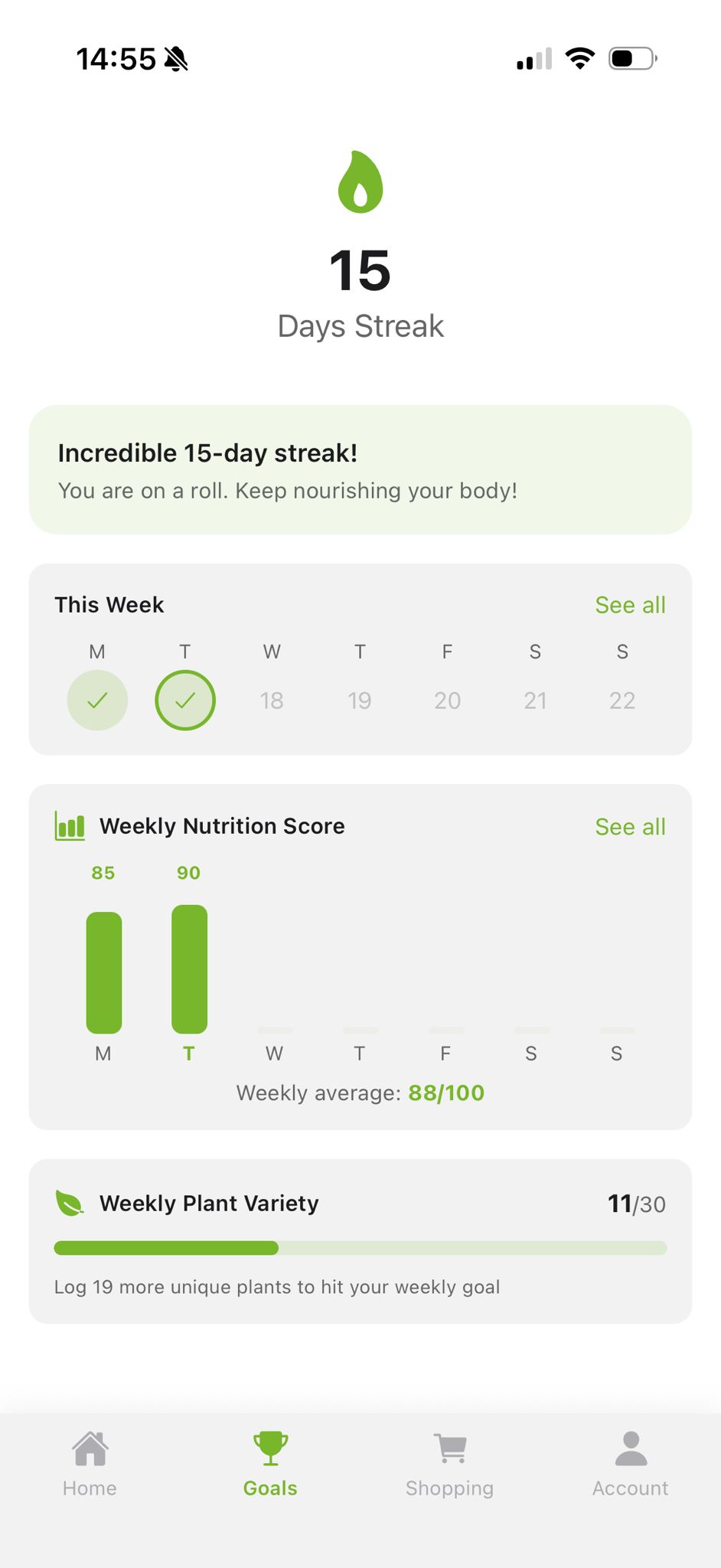
The visual progress indicator makes the gap between where you are and 30 feel manageable rather than abstract. When you can see that you're at 22 plants by Thursday, adding a handful of edamame to lunch or a new spice to dinner feels like a natural close rather than a chore.
This gamified approach is one of the reasons NutriBloom users are significantly more likely to maintain plant diversity targets at 8 weeks compared to manual tracking — the friction is low enough that the habit sticks.
The 30 Plants Challenge Variation Worth Trying
If the classic 30 plants challenge has felt too rigid — or triggered digestive discomfort from increasing fiber too fast — the variation below is worth trying:
The 25-plant floor, fermented bonus version:
- Aim for 25 different plant ingredients per week (slightly more achievable starting point)
- Add a fermented food to at least one meal per day (kefir, yogurt, kimchi, sauerkraut)
- Count the fermented food as a motivational "combo bonus" rather than a plant point
This version is easier to sustain because the floor is lower, the fermented component adds gut-health benefit without additional fiber stress, and the bonus framing makes the challenge feel positive rather than punitive on weeks where variety drops.
For a detailed walkthrough of how to build up to 30 plants gradually — especially if you've experienced bloating with high-fiber diets — the 30 plants challenge without bloating guide covers the three-week ramp in full.
The One-Sentence Version
Keep a seed mix on the counter, rotate your grains and legumes, use a different spice each day, and keep five frozen vegetables in the freezer — and let NutriBloom do the counting.
Twenty-five to thirty gut-friendly ingredients a week is not a challenge that requires willpower. It's a set of defaults that, once in place, take care of themselves.